

HOLLYWOOD NEEDS TO GIVE PROPS TO BLAXPLOITATION FILMS
Shaft, Foxy Brown, Cleopatra Jones, Superfly. These are some of the top movies from the so-called Blaxploitation movie era. But what Hollywood and many people who poo-poo these movies and the lesser known ones of the era is that it was “Blaxploitation” that laid the groundwork for the big budget action movies we enjoy today.
Let’s get into it.
Melvin Van Peebles
Actor, filmmaker, and writer Melvin Van Peebles was shut out by Hollywood in the late 1950s, even though he’d been involved in filmmaking and made two short films. But that didn’t discourage Van Peebles from learning his craft and making history. Of course, he had to leave the country to do it.
Van Peebles went to France, learned French and wrote the novel, La Permission, which was adapted into his first feature film, The Story of a Three-Day Pass (1967).
This is what the movie was about:
The film tells the story of Turner, a black U.S. Army G.I. stationed in France whose captain gives him a three-day pass just after he promotes him. As Turner gets ready to leave, his reflection in the mirror accuses him of being an Uncle Tom, but this is not the only time his reflection criticizes him or makes him doubt himself.
Turner goes to Paris, where he wanders mostly aimlessly for the first day. He finds himself in a nightclub, where he meets a white French shop clerk named Miriam. The pair spends the rest of the weekend together, enjoying their romance but also struggling with the complexities of racism. Eventually their miscegenation is reported to Turner’s captain and Turner is restricted to barracks. After some visiting African American women convince his commander to lift the restriction, he finds his girlfriend unavailable when he telephones her, and he decides that such amorous adventures are futile. The film cost $200,000 to make. And in 2020, The New Yorker called it “among the greatest American films of the 1960s.”
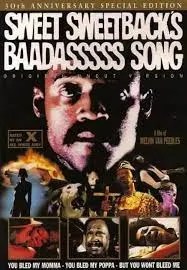
Most people know that Van Peebles is the man who kicked the door open to the Blaxploitation ear with 1971’s Sweet Sweetback’s Baadasssss Song.
Here’s what CBS News said about the film after Van Pebbles died in 2021 at age 89: But he was best known for “Sweet Sweetback’s Baadasssss Song,” one of the most influential movies of its time. The low-budget, art-house film, which he wrote, produced, directed, starred in, and scored, was the frenzied, hyper-sexual and violent tale of a Black street hustler on the run from police after killing white officers who were beating a Black revolutionary. With its hard-living, tough-talking depiction of life in the ghetto, underscored by a message of empowerment as told from a Black perspective, it set the tone for a genre that turned out dozens of films over the next few years and prompted a debate over whether Black people were being recognized or exploited.
“All the films about Black people up to now have been told through the eyes of the Anglo-Saxon majority in their rhythms and speech and pace,” Van Peebles told Newsweek in 1971, the year of the film’s release.
“I could have called it ‘The Ballad of the Indomitable Sweetback.’ But I wanted the core audience, the target audience, to know it’s for them,” he told The Associated Press in 2003. “So, I said ‘Ba-ad Asssss,’ like you really say it.”
Despite being rated X, Sweetback made $14 million at the box office and only cost $500,000 to make. But we should be clear about somethings when discussing Blaxploitation, it wasn’t until the non-Black folks got involved that it became exploitative. Van Peebles noted that in 2002, saying – “What Hollywood did — they suppressed the political message, added caricature — and blaxploitation was born.” True.
When the exploitation began
Just like the Kelce fade, when white people get involved, the narrative changes. Sure, some of the films, like Thomasine & Bushrod, had a Black writer and director –Max Julien and Gordon Parks Jr.—but when Hollywood discovered that these films could be made on limited budgets and bring in big profits, the real exploitation began.
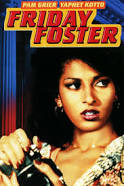
And as movie icon Pam Grier said in American Masters How It Feels to Be Free, “It wasn’t called Blaxploitation until a woman walked in the shoes of a man.”
A word! (Misogynoir to be exact) 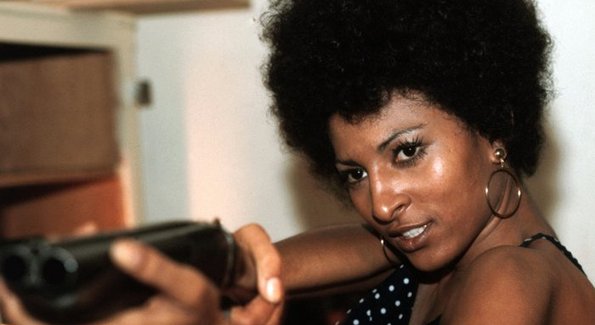
But if you look at the action movies that show up on the big screens today, you will see that they’re just Blaxploitation movies with bigger budgets and white people. There wouldn’t be kick ass heroines were it not for Grier and Tamara Dobson (Cleopatra Jones). Richard Roundtree was one of the first Black men to be viewed as a sexy symbol – because in his movie, Shaft, he could have sex, be sexy in that leather coat and call a white man a honky.
The history surrounding these movies is complex. Yes, most of the movies showed drugs, crime, and a lot of violence. But for Black people watching in the 1970s, it showed heroes who looked like them.


 Excellence In Black